Case Study: $30,000 Under List for a First-Time Buyer in Montgomery Village
How I helped a first-time buyer purchase a detached home in Montgomery Village for $30,000 under list and $45,000–$55,000 below recent comparable sales, ratified in one evening and closed in 19 days.
Edward Dumitrache
November 4, 2026
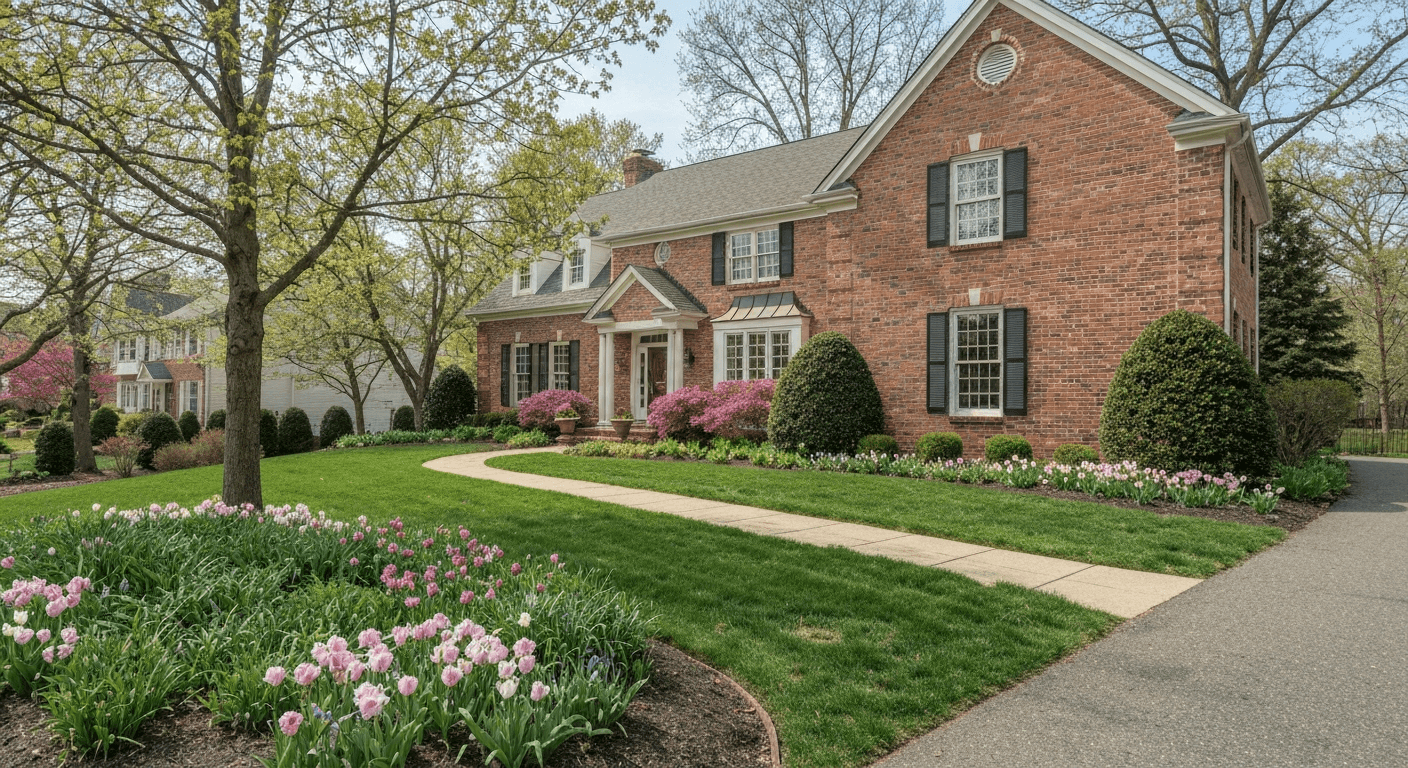
Part of: The Complete Guide to Buying a Home in Montgomery County, MD
List price $545,000. Purchased for $515,000. Similar homes nearby had sold for $560,000–$570,000. Ratified in one evening, closed in 19 days.
| Buyer | First-time homebuyer, commuting into DC |
| Home | Single-family detached, Montgomery Village, MD |
| List price | $545,000 |
| Recent comparable sales | $560,000–$570,000 (similar homes, past 6 months) |
| Purchase price | $515,000 ($30,000 under list) |
| Offer to ratified contract | Same evening |
| Ratified to keys | 19 days |
| Appraisal | Waived by the lender |
| Homes toured | About 25, over 4–5 tours |
The buyer
My client was a first-time buyer and one of the most analytical people I've worked with. He found me while researching the home-buying process online. When he reached out, I called him back right away, and we started with a conversation, not a showing.
His goals were specific:
- Commute: within a 10–15 minute drive of the Metro Red Line, since he goes into DC at least twice a week
- Home: ideally a detached house, though he was open to a townhome
- Payment: a monthly payment he'd be genuinely comfortable with, not just one he could qualify for
- Value: a real deal, either a home with room for some sweat equity or a meaningful discount compared to what similar homes in the neighborhood had sold for
The challenge
He was buying in the fall of 2026, when mortgage rates hit their highest level in about three years. Freddie Mac's weekly average for a 30-year fixed loan reached 7.40% in early October. Higher rates make every dollar of purchase price more expensive each month, so overpaying wasn't an option.
At the same time, Montgomery County inventory is full of homes priced for a market that no longer exists. The hard part isn't finding a house. It's knowing which ones are actually worth the price.
Phase 1: Learn the market first
We toured four or five times, five or six homes each trip. The goal of those early tours wasn't to make an offer. It was for my client to see the styles of homes in his price range and figure out what he actually liked.
Several homes looked promising until I ran the comparable sales. Many were overpriced for their condition, and I said so plainly:
"I'll help you buy this house if you want it, but I don't think it's a good idea for you to buy this one."
I said some version of that more than once. It's not the typical sales line, but it's my job. If a client really loved one of those houses, I would have helped him buy it and fought for the best price. But my first responsibility is advice he can trust, whether or not he buys that day. (More on how I decide: When I tell buyers not to buy.)
Phase 2: The right house, and doing the homework
When we walked into this home, a detached house in Montgomery Village listed at $545,000, it checked his boxes. Before writing anything, I did the due diligence that matters most at offer time:
- Comparable sales: similar homes in the same subdivision had sold for $560,000 and $570,000 within the previous six months. At list price, this home was already below recent sales.
- Seller motivation: the signs pointed to a seller who was ready to move on quickly.
- Market conditions: with rates at a three-year high, fewer buyers were competing, and motivated sellers had fewer options. (Why that can work in a buyer's favor: Buying when rates are high.)
Put together, that meant we could go in well below list and still be taken seriously, so we went in even lower than we had first planned.
Phase 3: An offer built to be taken seriously
- Price: $505,000, $40,000 under list
- Earnest money deposit: well above the typical 1–3% of the price. A large deposit tells the seller you're serious and unlikely to walk away. (How earnest money works: How much earnest money should you put down?)
- Short contingencies: a 7-day inspection period and a 14-day appraisal period
- A fast close: about three weeks
Financing was a quiet advantage. I connected my client with my preferred lender, whose rate came in more than half a percentage point lower than what other lenders were offering at the time, with no points and no lender fees. Over a 30-year loan, that's real money every single month. (Want my lender's contact? It's included when you request the homebuyer's guide.)
Phase 4: The negotiation, settled in one evening
The seller countered at $525,000, essentially offering to meet in the middle.
We didn't split the difference. I told the listing agent $515,000 was our highest and best, and if the seller accepted, we would sign that night. The seller accepted, and we ratified between 10 and 11 PM.
To be honest, the house would have been worth $525,000; the comps proved that. In a stronger market it probably would have drawn a full-price offer within days. But the seller was eager to move on, and recognizing that moment was worth $10,000 at the counter, $30,000 off list, and $45,000–$55,000 below what similar homes had recently sold for.
Phase 5: Under contract, with nothing left to chance
Day 0: a written roadmap. That night, my client received a personalized "Under Contract" timeline with every contract deadline, what happens at each step and why it matters. Every deadline went on both of our calendars. The title company and lender had the contract within an hour of signing.
HOA documents, reviewed the next morning. Montgomery Village homes come with community association documents, and buyers only have a few days to review them. I reviewed the full package the next morning and sent a plain-English summary of fees due at closing, rules that affect daily life, the association's finances and reserves, and anything the seller needed to resolve. I always recommend having an attorney review them as well. When one item needed confirming, the title company got written confirmation from the association within hours.
A thorough inspection, with real repair numbers. The general home inspection and a termite inspection turned up only a minor, easily fixed leak from a pipe off the primary bathroom. Because the house was built in the 1970s with cast-iron sewer pipes, we added a sewer scope (a camera inspection of the main sewer line), which came back fine. I also brought my preferred handyman to the house to give my client accurate quotes for anything he'd want to fix, so he could decide based on real costs instead of guesses. With a home in that shape, he chose not to ask the seller for anything, and we moved forward with confidence.
The appraisal was waived. Because the price was so far below recent sales, the lender waived the appraisal entirely: no appraisal fee, no waiting, and no risk of a low value derailing the deal.
No last-minute surprises. In the final week: settlement time confirmed, final walk-through scheduled for the morning of closing, a utilities guide with phone numbers and call scripts, the settlement statement reviewed line by line, the Closing Disclosure delivered on time, and a reminder to verify wire instructions by phone before sending money, because closing scams target exactly that moment.
Closing day, and after
Walk-through in the morning, closing at noon, 19 days after ratification.
That afternoon my client received a Welcome Home guide: a first-30-days checklist, which documents to keep, mail scams new homeowners commonly see, community rules, and every contact he'd need in one place. He called it a blueprint for his first months as a homeowner. He also got a reminder about Maryland's Homestead Tax Credit (a one-time application that limits how quickly a homeowner's taxable assessment can rise) and a framed print celebrating his first home.
By the numbers
- $30,000 under list price
- $45,000–$55,000 below similar homes sold in the past six months
- $10,000 saved by holding firm on the counteroffer
- Same-evening ratification
- 19 days from contract to keys
- No appraisal needed: waived by the lender
- More than half a percentage point lower interest rate than other lenders were offering, with no points and no lender fees
My takeaways for buyers in Montgomery County
- Tour to learn first. Knowing what you like and what homes are really worth makes you fast and confident when the right one shows up.
- The comps decide, not the list price. I'll tell you when a house isn't worth it, and when one is a bargain.
- High-rate markets reward prepared buyers. Fewer competing buyers means motivated sellers negotiate. Shop your lender.
- Strong terms make a low offer credible. A serious deposit, short contingencies and a quick close carry real weight.
- Inspect for the age of the house, and price the fixes. A sewer scope on a 1970s home and real quotes from a handyman turn unknowns into numbers.
- Read the HOA documents, and get help with them. Your review window is short.
If you're just starting out, my first-time buyer guide for Montgomery County and the Maryland first-time buyer programs roundup are the right next reads.
Frequently Asked Questions
Can you offer $30,000 under asking price?
Yes, when the data supports it. In this purchase, the comps, a motivated seller and a high-rate market with fewer competing buyers let us open at $40,000 under list. Strong terms (a deposit well above the typical 1–3%, short contingencies and a quick close) kept the offer credible, and we settled at $515,000, $30,000 under list. On a home priced above its comps with plenty of buyer interest, the same offer would likely go nowhere.
Can a lender waive the appraisal on a home purchase?
Sometimes. Here the purchase price was so far below recent comparable sales that the lender waived the appraisal entirely: no appraisal fee, no waiting and no risk of a low value derailing the deal. That decision belongs to the lender, so don't plan an offer around it.
How fast can you close on a house in Montgomery County?
This one closed 19 days after ratification. The offer promised a close in about three weeks, the title company and lender had the contract within an hour of signing, and every deadline was calendared on day one. Your timeline depends on your loan, your contract and the seller.
Get the guide
Thinking about buying in Montgomery County? Get my 2027 Montgomery County Homebuyer's Guide, including my preferred lender's contact information.
Get the 2027 Homebuyer's Guide →
Schedule a no-pressure call with Edward →
Edward Dumitrache, REALTOR® · Pearson Smith Realty · Licensed in MD, DC and VA · (301) 357-1170
Rate data: Freddie Mac Primary Mortgage Market Survey (30-year fixed weekly average: 7.40% for the weeks of Oct 8 and Oct 15, 2026). Past results don't guarantee future outcomes; every transaction is different.
About the Author

Edward Dumitrache
REALTOR®, Pearson Smith Realty
Licensed in MD, DC & VA · 10+ years · 100+ transactions · Montgomery County specialist
MD License 668402 · DC License SP98376910 · VA License 0225228053
Related Reading


Ready to make a move?
I'm always happy to talk through what's happening locally — no obligation.
Get in Touch