Old Town Alexandria, VA Neighborhood Guide 2026: Prices, Schools, Walkability & What Buyers Should Know
Old Town Alexandria is one of the DC region's most walkable historic neighborhoods — cobblestone streets, federal-era row houses, Metro access. An honest 2026 buyer's guide: pricing tiers, school reality, and the trade-offs.
Edward Dumitrache
June 19, 2026
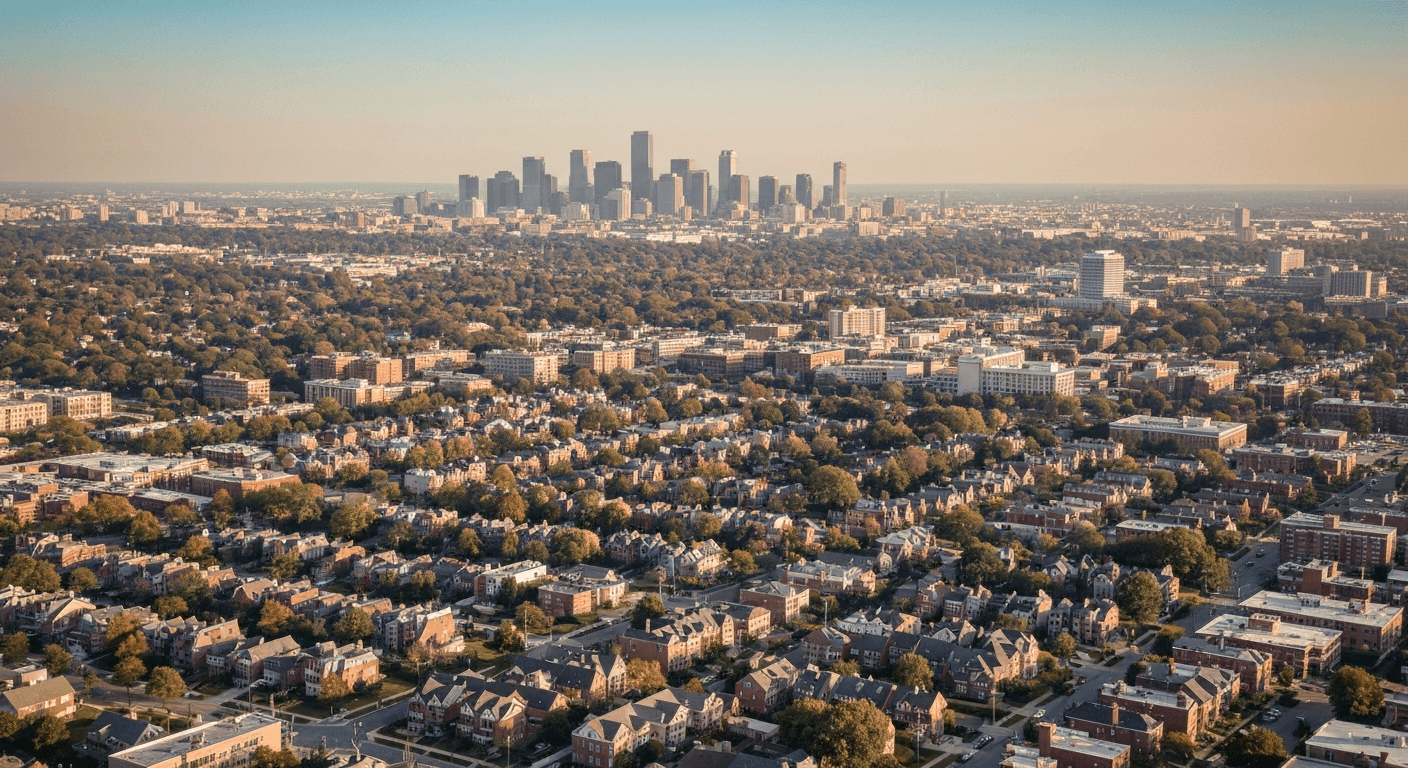
Part of: The DC Metro Neighborhood Guide — Where to Buy in MD, DC, and Northern Virginia
Old Town Alexandria is the part of the DC region that most resembles a coastal New England port city. It is also, depending on which block, one of the most expensive places to buy a small home in the entire Mid-Atlantic. If you're searching for an Old Town Alexandria neighborhood guide, here is the honest version — the pricing tiers, the school reality, what walkability actually means here, and the trade-offs that don't make the chamber-of-commerce brochure.
Quick Answer
- Setting: Historic district along the Potomac River, ~6 miles south of downtown DC. Cobblestone streets, federal-era row houses, brick sidewalks, working waterfront.
- 2026 median home price (entire Old Town area): ~$925,000 across all property types — but the range is huge ($550K condos to $3M+ historic row homes).
- Walkability: Top-tier. Walk Score above 90 in the core. King Street is genuinely walkable from end to end (the waterfront to the Metro).
- Schools: Alexandria City Public Schools — a real consideration, see the schools section below. Not the strongest in the region, but improving.
- Metro: King Street–Old Town (Blue/Yellow lines). Direct to L'Enfant, Capitol Hill, and downtown DC.
- Best for: Buyers who specifically want a walkable, historic, urban-village setting and value the lifestyle above schools, square footage, or price per foot.
The Five Sub-Areas of Old Town
"Old Town" is used loosely. Locally and in MLS searches, there are five meaningful sub-areas, each with a different price profile and personality:
1. North Old Town
North of King Street, between Washington Street and the river. Quieter, more residential, denser stock of restored federal and Greek Revival row homes. Pricing skews highest here — $1.5M–$3M+ for restored historic homes. Closest to Founders Park and the waterfront.
2. South Old Town (Yates Gardens / Hunting Creek)
South of King Street through to Hunting Creek. More mixed-use, slightly newer housing stock interspersed with the historic homes. Yates Gardens specifically is a beloved tight-knit pocket. Pricing $900K–$2M for row homes, $550K–$900K for condos and townhouses.
3. The West End of Old Town (around the King Street Metro)
Stretches from the Metro station east toward Washington Street. Mix of historic row homes, newer luxury condos (Carlyle, the Eisenhower Avenue corridor edge), and the Old Town Commons community. More attainable price points: $500K–$850K for newer condos, $900K–$1.4M for historic homes.
4. The Waterfront District
Strand Street and the streets immediately abutting the Potomac. The newest pricing tier — the historic Robinson Terminal redevelopment, the Hotel Indigo, and the renovated waterfront have repositioned this stretch. New construction luxury condos $900K–$2.5M+. Working waterfront views, public pier access, the King Street trolley.
5. Rosemont (technically adjacent to Old Town)
Just west of Old Town across Route 1/Washington Street. Larger detached homes with yards, tree-lined streets, walk to King Street Metro. Often grouped with Old Town in casual conversation but technically its own neighborhood. Pricing $1.2M–$2.5M+ for single-family homes.
Pricing Tiers (2026)
| Property Type | Typical Range | Where to Look |
|---|---|---|
| 1BR condo | $400K–$650K | West End, parts of the Waterfront |
| 2BR condo / townhouse | $650K–$1.1M | South Old Town, West End |
| Small historic row home (2–3 BR) | $900K–$1.5M | North Old Town, South Old Town |
| Restored historic row home (3–5 BR) | $1.5M–$3M | Core North Old Town, Yates Gardens |
| Waterfront luxury new construction | $1.2M–$3M+ | The Waterfront District |
| Single-family home (Rosemont/adjacent) | $1.2M–$2.5M+ | Rosemont, edges of Old Town |
Old Town carries a 30–40% premium over comparable Alexandria neighborhoods (Del Ray, Beverley Hills) and a ~15–20% premium over comparable DC neighborhoods (Capitol Hill) for equivalent historic stock — pricing reflects the walkability and waterfront access more than the square footage.
Schools (The Honest Section)
Old Town is served by Alexandria City Public Schools (ACPS). The Old Town–zoned elementary is Lyles-Crouch (a well-regarded Title I traditional academy with a magnet pull). The middle and high school assignment goes to George Washington Middle School and Alexandria City High School (formerly T.C. Williams).
The reality: Alexandria City High School ranks roughly in the middle of Virginia public high schools — Niche grades it in the B range. That's below the top-tier Fairfax County (Langley, McLean, Madison) and Falls Church City clusters most luxury DC-area buyers compare against.
Who this doesn't matter to: Buyers without school-age children, buyers planning to use the strong private school options in the area (St. Stephen's & St. Agnes, Episcopal HS, Bishop Ireton), and buyers who value the walkable historic lifestyle above the school cluster ranking.
Who this matters to: Families with elementary-aged children who plan to stay through high school and who are using the same budget to weigh Old Town against North Arlington, McLean, or Bethesda. For pure public-school strength, those are stronger options.
What Walkability Actually Means Here
This is the strongest single feature of Old Town and the most-overhyped. Honest read:
What walks well:
- King Street end-to-end (1 mile from the Metro to the Potomac), with restaurants, shops, and the trolley
- Founders Park and the Mount Vernon Trail (jogging, biking)
- The Saturday farmers market
- Daily grocery — Trader Joe's (under construction in the Waterfront District at writing), Whole Foods Market in West End, Harris Teeter on Duke Street
What doesn't walk well:
- Most school pick-up scenarios (drive)
- Major errand chains (Target, Costco — drive to Potomac Yard or Bailey's Crossroads)
- Commute to Northern Virginia jobs outside DC (Tysons, Reston — drive)
- Parking your second car if you have one (notoriously hard, and many historic homes have zero off-street parking)
Commute Reality
- To downtown DC (Capitol Hill, L'Enfant, Federal Triangle): 20–35 minutes by Blue/Yellow Line from King Street Metro. Very competitive with DC neighborhoods.
- To downtown DC by car: 25–45 minutes on the GW Parkway, longer at peak. Parking in DC is the bigger problem.
- To Pentagon: 10 minutes by Metro or car.
- To Tysons: 35–55 minutes (Metro requires a transfer; driving requires the Beltway).
- To Reston / Dulles tech corridor: 50–75 minutes. Long. If a parent works there, Old Town is the wrong neighborhood.
- To Bethesda / NIH: 45 minutes by Metro (transfer at Metro Center), 40 minutes by car off-peak.
The Trade-Offs Nobody Puts in the Brochure
- Parking. Many historic row homes have one space or none. Street parking is permit-only and contested. If you own two cars and aren't ready to give one up, the West End or Rosemont are better fits than the historic core.
- Maintenance on historic homes. Federal-era row homes come with brick pointing, slate roofs, historic-district renovation rules, and HVAC retrofits in spaces never designed for ducted air. Budget accordingly.
- Flood and storm exposure. Hurricane Isabel (2003) and several subsequent storms flooded the Strand and lower waterfront blocks. New construction includes mitigation; older homes on the waterfront may not. Check the flood map and the federal flood insurance picture before committing.
- Tourism. King Street and the waterfront see real foot-traffic crowds on weekends and during First Night, Scottish Walk, Art on the Avenue. Most residents like it; some don't. Spend a Saturday before deciding.
- Property taxes. Alexandria City's 2026 real estate rate is ~$1.135 per $100 (well above Fairfax County's ~$1.04 and Loudoun's ~$0.86, comparable to Maryland MoCo). On a $1.5M home that's about $17,000/year.
How Old Town Compares to Peer Neighborhoods
| Neighborhood | What it has over Old Town | What Old Town has over it |
|---|---|---|
| Del Ray (Alexandria) | Better schools (same district but stronger elementary feeders), more family-density, lower prices | Walkable downtown, waterfront, historic stock |
| Capitol Hill (DC) | Larger inventory of restored row homes, DC institutions on doorstep | Quieter, river/walkability, no DC income tax for Virginia residents |
| Vienna VA | Top-tier schools (Madison HS), larger homes, lower density | Walkability, waterfront, urban-village feel |
| Bethesda MD | Top schools, more amenities, NIH/Walter Reed access | Lower price-per-square-foot in equivalent historic stock, more architectural character |
See Alexandria VA best neighborhoods for the full Alexandria-side comparison and Vienna VA neighborhood guide for the closest direct NoVA peer.
Who Old Town Is Right For
- Empty-nesters or DINKs who want a walkable historic lifestyle without DC density
- Buyers who work downtown DC and value Metro access without DC income taxes
- Federal workers, lobbyists, military personnel stationed at the Pentagon
- Anyone who values architectural character and historic context above lot size and school cluster
- Second-home buyers who want a walkable urban pied-à-terre
Who It's Not For
- Families optimizing primarily for public school strength
- Buyers who need a yard, garage, or large lot
- Anyone who works in Tysons, Reston, or further out in Loudoun
- Buyers stretching their budget — the maintenance + parking + flood + tax stack makes Old Town a poor "barely afford it" purchase
Frequently Asked Questions
Is Old Town Alexandria a good place to buy a home?
Yes if you specifically want the walkable historic-port lifestyle and are not optimizing for public school strength or large square footage per dollar. The lifestyle is genuinely distinctive in the DC region and the demand has been durable for decades. The pricing reflects that, and the supply is hard-capped because the historic district prevents new infill.
How expensive is Old Town Alexandria?
The 2026 median across all property types runs around $925,000. Realistically, a 2-bedroom condo runs $650K–$1.1M, a small historic row home runs $900K–$1.5M, and a restored historic home runs $1.5M–$3M+. Waterfront luxury condos clear $1.2M–$3M+.
What are the schools like in Old Town Alexandria?
Alexandria City Public Schools, served at the high school level by Alexandria City High School. Niche grades it in the B range, which is below the top Fairfax County clusters (Langley, McLean, Madison) but on par with most of DC's public options. The Lyles-Crouch elementary is well-regarded. Private school options are strong in the area.
How long is the commute from Old Town to DC?
20–35 minutes on the Blue or Yellow Metro line from King Street Station to downtown DC. By car, 25–45 minutes depending on time of day. To the Pentagon, 10 minutes either way.
Is Old Town Alexandria walkable?
Yes — Walk Score above 90 in the core. King Street is genuinely walkable end-to-end. Daily grocery, restaurants, the waterfront, and the Metro are all reachable on foot from the historic core. Major errands and most school logistics still require a car.
What's the difference between Old Town Alexandria and Alexandria as a whole?
Old Town is the historic core along the Potomac. The broader city of Alexandria includes Del Ray (a separate walkable neighborhood with stronger family character), Rosemont (adjacent to Old Town, larger homes), Beverley Hills (mid-century suburb), the West End (more diverse and more affordable), and Potomac Yard (newer mixed-use development). Pricing and character vary significantly across these neighborhoods.
Can you live in Old Town without a car?
Yes, technically — Metro, walkability, and a Zipcar program make it possible. In practice, most households keep one car for groceries beyond the immediate walkable radius, weekend trips, and school logistics. Going carless is more realistic in Old Town than in any other Alexandria neighborhood.
Related Resources
- Alexandria, VA Best Neighborhoods (2026)
- Vienna, VA Neighborhood Guide (2026)
- Falls Church, VA Neighborhood Guide
- The DC Metro Neighborhood Guide
Considering Old Town or weighing it against a Maryland alternative? Reach out — I cover the entire DC Metro and can give you the honest cross-river read most agents won't.
Sources & further reading
County and transit sources for Northern Virginia buyers:
- WMATA — Metro lines, stations and real service times for commute maths
- Fairfax County, Virginia — county tax rates, schools and permitting for Fairfax buyers
- Loudoun County, Virginia — county services, assessments and development data
About the Author

Edward Dumitrache
REALTOR®, Pearson Smith Realty
Licensed in MD, DC & VA · 10+ years · 100+ transactions · Montgomery County specialist
MD License 668402 · DC License SP98376910 · VA License 0225228053
Related Reading

Northern Virginia Housing Market August 2026: Arlington $860K (+14.8%), Fairfax Goes Negative
Read →
Wealthiest DC Suburbs Ranked 2026: Top 10 by Median Home Price & Income
Read →
Most Walkable Neighborhoods in Montgomery County: Where You Can Actually Leave the Car Home
Read →Ready to make a move?
I'm always happy to talk through what's happening locally — no obligation.
Get in Touch