How to Flip a House in Montgomery County, MD (2026 Investor Guide)
Flipping in Montgomery County is not the 70%-rule market YouTube sells you. Here is the real math on a MoCo flip, where the margins actually are, how DPS permits shape your timeline, and the costs that quietly kill first-time flips.
Edward Dumitrache
September 17, 2026
Part of: The Complete Guide to Buying a Home in Montgomery County, MD
Most house-flipping advice is written for markets where you can buy a three-bedroom for $120,000. Montgomery County is not that market. The median sale price here was $639,540 in August 2026, up 3.3% year over year, with homes going under contract in a median of 18 days — numbers I pull from Bright MLS each month in my Montgomery County market reports.
That changes the arithmetic of a flip in ways the national gurus never mention. Your acquisition is six figures before you swing a hammer. Your carrying costs on hard money are real money every month. And the county's permitting process has a say in your timeline whether you planned for it or not.
Here's how flipping actually works in MoCo, from someone who sources these deals for a living.
The 70% rule breaks in Montgomery County
The rule every flipping channel teaches: maximum offer = (ARV × 0.70) − rehab.
On a $550,000 ARV with a $90,000 rehab, that says offer $295,000. Go find me a $295,000 house in Wheaton that only needs $90,000 of work. I'll wait.
The 70% rule is not wrong in principle — it is a margin buffer expressed as a percentage. The problem is that it was calibrated for low-basis markets. In a high-basis market like MoCo, the same dollar profit is a much smaller percentage, because the denominator is enormous. Experienced MoCo flippers generally work off a dollar-margin target rather than a percentage, and they underwrite the costs line by line instead of hiding them inside a 30% haircut.
Underwrite it explicitly instead:
ARV — what it sells for, renovated, supported by closed comps of similar age, size and finish level in the immediate submarket. Not Zestimates. Not "my agent thinks."
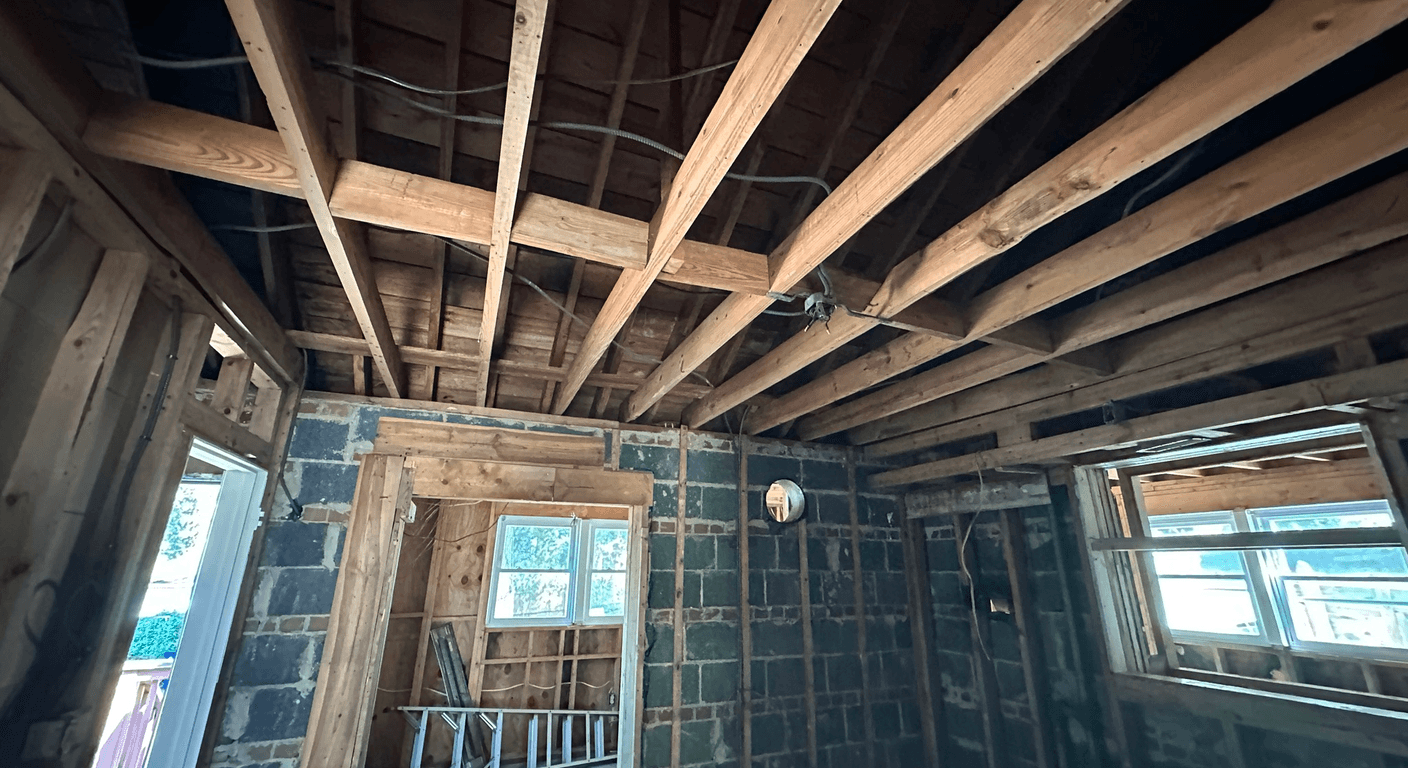
Minus rehab — with a contingency. Every 1950s MoCo house has a surprise: knob-and-tube, a cast-iron stack, asbestos tile under three layers of vinyl, a panel nobody has touched since the Carter administration.
Minus acquisition costs — transfer and recordation taxes, title, inspection.
Minus holding costs — hard money interest, taxes, insurance, utilities, for every month you own it. This is the line first-timers understate the most.
Minus selling costs — commission, seller-paid transfer taxes, concessions.
Minus your margin — the actual number you need to make this worth the risk.
What's left is your maximum offer. If that number is below what the seller will take, you don't have a deal. Walk. There will be another one.
Where the margins actually are in MoCo
Not Bethesda. Not Potomac. The renovation cost per square foot is similar across the county, but the acquisition basis in the high-end submarkets is so large that your capital gets tied up for a margin that a cheaper submarket delivers with less exposure.
The flip-friendly parts of Montgomery County share three traits: post-war housing stock, strong renovated resale, and a spread between as-is and renovated that is bigger than the cost to close it.
In practice that means the inside-the-Beltway-adjacent corridor:
- Wheaton — 1949–1955 brick capes and ramblers, Red Line access, and a renovated resale market that has moved up substantially. I wrote about the Wheaton and White Oak value thesis separately because it's where I see the most investor activity.
- Silver Spring (20902, 20906) — same era housing, deep rental demand as a fallback exit.
- Aspen Hill and Glenmont — similar stock, slightly lower basis.
- Parts of Rockville and Gaithersburg — more 1960s–70s product, larger lots.
- Germantown — newer, townhouse-heavy, a different play entirely (usually cosmetic, not gut).
The common thread is 1950s-era detached housing where the renovated comp is materially above the as-is comp. If that spread doesn't exist in a submarket, no amount of granite creates it.
Finding deals: the MLS is the last place to look
By the time a distressed MoCo property hits Bright MLS, it has been seen by every investor with a saved search. If you're buying on-market, you're bidding against people whose numbers may be worse than yours — and who will happily overpay.
The deals that actually pencil come from:
Wholesalers. Dispositions teams blast contracts to buyer lists. Quality varies enormously; the ARVs are frequently optimistic and the rehab numbers frequently fantasy. Verify everything independently.
Direct-to-seller. Owners who need out — inherited property, deferred maintenance they can't fund, a move already made. I've written about both what to do with an inherited Maryland house and selling a Montgomery County house as-is, because those are the sellers most likely to want a fast, clean, contingency-free close.
Agents who know you're real. This is the one people skip. An agent with a seller who needs certainty over price will call the buyer who closed last time — not the one who asked forty questions and ghosted.
Public records. Long-held properties with out-of-state owners and no recent permits are worth a letter. You can run ownership, deed and tax history yourself; I walk through the whole process in how to look up Montgomery County property records, and the state's own Real Property Search is free.
I post the off-market deals that cross my desk — with ARV, comps and photos — on my investment deals page. Not every one will fit your buy box, but they're real, and the numbers are shown rather than teased.
Permits: the thing that eats your schedule
This is where MoCo flips go over budget, and it's almost never about the fee — it's about the calendar.
Structural changes, electrical, plumbing, HVAC replacement, decks, and finishing a basement into habitable space all generally require permits through the Montgomery County Department of Permitting Services. Review and inspection timelines vary by scope and by how busy DPS is, so build a realistic window into your holding-cost model rather than assuming a rubber stamp — and confirm current requirements and turnaround directly with DPS for your specific scope, because they change.
Two specifics that matter disproportionately for MoCo flips:
Basement bedrooms. A "bedroom" is a legal term, not a marketing one. Egress, ceiling height, and light-and-ventilation requirements all apply, and an unpermitted basement bedroom is a finished room you cannot advertise as a bedroom — which is exactly the value you were buying. If your ARV depends on going from 3 bedrooms to 5 or 6, the permit is not optional paperwork; it is the deal.
Work done without permits by a previous owner. You inherit it. An unpermitted addition discovered at resale can stop a contract cold. Check permit history before you buy, not after.
Your permits also reset the property taxes. Permitted improvements that add more than $100,000 of value trigger an out-of-cycle reassessment by SDAT, and that added value isn't phased in. So your buyer's taxes will be based on the renovated house, often within months of closing. The County's required first-year tax estimate (County Code §40-12C) is calculated from SDAT's current assessment, which may still reflect the house before your work, so it can understate the real bill. Disclose a realistic post-renovation tax figure based on the sale price. It protects your buyer and your deal. I walk through what this looks like from the buyer's side in why property taxes jump after buying a flipped home.
Contractors: verify the license
Maryland requires home improvement contractors to be licensed through the Maryland Home Improvement Commission (MHIC). You can and should verify a license — and check complaint history — through the Maryland Department of Labor's MHIC page before you sign anything or hand over a deposit.
An unlicensed contractor is not a discount. It's an uninsured liability with a truck.
Lead paint: a real constraint on pre-1978 stock
Most of the flip-friendly housing in Montgomery County was built in the 1950s, which means lead paint is a live issue rather than a theoretical one.
Federal law requires lead-based paint disclosure on the sale of most pre-1978 housing. Maryland layers its own requirements on top, administered by the Maryland Department of the Environment — and the obligations are materially heavier if the property will be a rental rather than a resale. If your backup exit is renting the property instead of selling it, understand those rules before you buy, not when your flip won't sell.
This is one to confirm with MDE and your own counsel for your specific property and exit. The rules are detailed and I am not going to summarize them into something you'd rely on.
The costs first-timers forget
Transfer and recordation taxes. Maryland and Montgomery County both take a cut at closing, and there are state and county components. I keep a full breakdown in my Montgomery County transfer and recordation tax guide — and because rates and exemptions change, confirm the current figures against Montgomery County Finance rather than a number from a forum post. On a mid-six-figure MoCo property this is a meaningful line, not a rounding error — and you may pay it twice, once buying and once selling.
Holding costs. Hard money interest, property tax, insurance (vacant-property policies cost more than you think), utilities to run HVAC and lights for inspections. Model these monthly and then add months, because the schedule will slip.
Selling costs. Commission, seller concessions, and whatever the buyer's inspector finds.
Taxes on the profit. A flip held under a year is short-term, and if you flip habitually the IRS may treat you as a dealer — which changes the character of the income entirely. My Maryland capital gains post covers the general shape of this, but flipping is precisely the situation where you want a CPA who has done it before, not a blog post. Mine included.
The exit is the whole game
Everything above is a cost. The only line that pays you is the resale — and that depends on whether the finished product is what buyers in that submarket actually want.
The current market gives you a useful signal. MoCo homes sold in a median of 18 days in August 2026, which is fast. But new pending sales were down 15.8% year over year — that's a velocity warning, not a price collapse, and it means the buyer pool is thinner than the days-on-market number suggests.
Practically: renovate to the standard of the comps you underwrote, not above it. The most common way a MoCo flip loses money is over-improving — putting a $700,000 finish level into a street that tops out at $550,000. The comps tell you the ceiling. Build to it and stop.
Five ways MoCo flips go wrong
- Trusting a wholesaler's ARV. Pull the comps yourself. Renovated, same era, same submarket, closed within six months.
- No contingency on a 1950s house. Something is always wrong behind the plaster.
- Assuming the permit is a formality. Especially on basement bedrooms, where the permit is the value.
- Over-improving. The street has a ceiling and it does not care about your finishes.
- Underwriting a schedule that assumes nothing slips. Everything slips. Model it.
Frequently asked questions
Is house flipping profitable in Montgomery County, MD? It can be, but the profile is different from a low-basis market: larger capital requirement, larger absolute dollar margins, and a smaller percentage return on a much bigger number. It rewards investors who underwrite precisely and punishes people applying national rules of thumb.
What's the best area in Montgomery County to flip? The submarkets with 1950s detached housing and strong renovated resale — Wheaton, Silver Spring, Aspen Hill, Glenmont. The test is whether the gap between the as-is comp and the renovated comp exceeds the cost of closing that gap.
Do I need permits to flip a house in Montgomery County? For most structural, electrical, plumbing, HVAC and basement-finishing work, yes. Check with DPS for your specific scope. Unpermitted work by a prior owner becomes your problem at resale.
How much cash do I need to flip a house in MoCo? More than the equivalent flip elsewhere. Hard money typically requires meaningful money down plus rehab reserves plus holding costs, on an acquisition that starts in the high five or six figures. Terms vary by lender and by your track record.
Can I flip a house in Montgomery County with no money? Realistically, no. Wholesaling a contract is a different business from flipping a house, and the "no money down" flip is mostly a way to sell courses.
Where to start
If you're evaluating your first deal, read the DC metro investment property starter guide for the financing mechanics, then learn to pull county records yourself so you can verify a wholesaler's claims instead of believing them.
And if you want to see what real off-market MoCo deals look like — with the ARV, the comps and the photos on the page rather than behind an opt-in — the current ones are on my investment deals page.
I've closed 100+ transactions in this county and I write about what that actually taught me. If you're hunting a flip in Montgomery County and want a second set of eyes on the numbers before you go hard on a deposit, that call is free.
This is general information, not legal, tax or investment advice. Permit requirements, tax rates and lead-paint obligations change — verify current rules with Montgomery County DPS, Montgomery County Finance, the Maryland Department of the Environment, and your own CPA and attorney before you rely on anything here.
About the Author

Edward Dumitrache
REALTOR®, Pearson Smith Realty
Licensed in MD, DC & VA · 10+ years · 100+ transactions · Montgomery County specialist
MD License 668402 · DC License SP98376910 · VA License 0225228053
Related Reading
Buying Your First Investment Property in the DC Metro (2026 Starter Guide)
Read →
Sell My House Fast in Maryland: How to Get Multiple Cash Offers (Without a "We Buy Houses" Company)
Read →
Bought a Flipped Home in Montgomery County? Why Your Property Tax Jumped (and What You Can Do)
Read →Ready to make a move?
I'm always happy to talk through what's happening locally — no obligation.
Get in Touch