Who Pays for What When Buying a House in Maryland: Inspection, Appraisal, Closing Costs, and Realtor Fees
In Maryland, the buyer pays for some things, the seller pays for others, and a few are negotiable. Here's the actual breakdown — line by line, in 2026 dollars — from a REALTOR® who writes contracts in DC, MD, and VA every week.
Edward Dumitrache
May 19, 2026
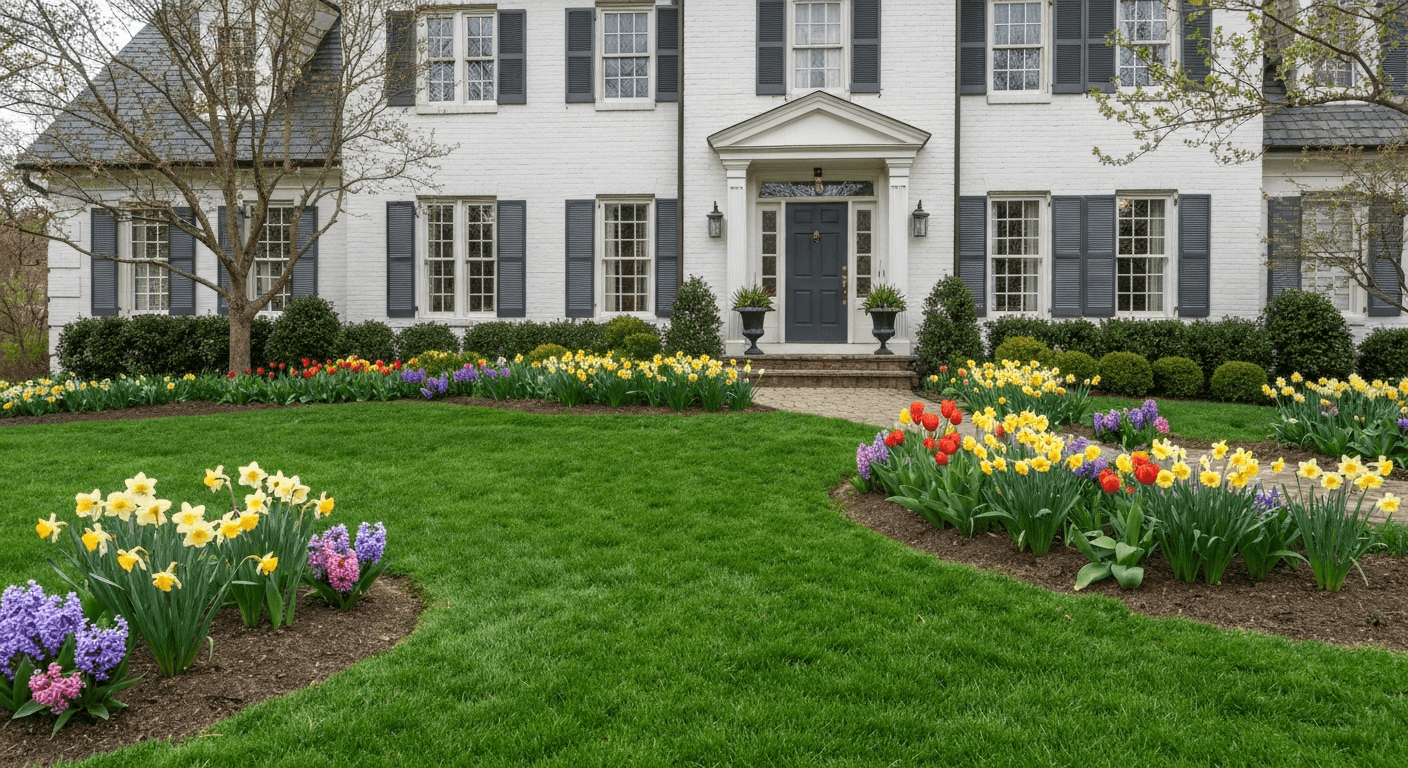
The single most-Googled question when buying a house in Maryland isn't "how much can I afford" or "what's the best neighborhood." It's a much more practical one: who pays for what?
Inspection, appraisal, closing costs, realtor commission, transfer tax, title insurance — every line on the closing statement has someone's name attached to it. Some are buyer expenses by default, some are seller expenses by default, and a handful are negotiated into the contract one deal at a time.
After ~100 closings, here's the actual breakdown for Montgomery County and the rest of the Maryland side of the DC metro.
Who pays for the home inspection in Maryland?
The buyer pays. Always.
A home inspection in Maryland runs $400–$600 for a single-family home, sometimes more for very large homes or homes with extensive add-on inspections (radon, termite, mold, sewer scope, chimney). The buyer hires the inspector, the buyer chooses the inspector, and the buyer writes the check directly to the inspector at the end of the inspection.
The seller is not involved in this transaction. They simply make the home available for the inspection during the inspection window (typically 7–10 days from contract).
A few related costs to know about:
- Radon test: $150–$250 (usually bundled with the inspection)
- Termite / WDI inspection: $75–$150 (required for VA loans, optional for others)
- Sewer scope: $200–$400 (highly recommended on older homes)
- Mold test: $300–$500 (only if visible signs warrant it)
These are all paid by the buyer, on top of the base inspection fee. Plan on $600–$1,200 total for a thorough inspection package on a typical Montgomery County home.
For what to actually do with the inspection findings, see home inspection problems and how to negotiate them.
Who pays for the appraisal when buying a house in Maryland?
The buyer pays. Almost always.
An appraisal in the DC metro runs $550–$800 for a standard single-family home, more for luxury homes or unique properties where the appraiser has to pull obscure comps. The lender orders the appraisal — buyers don't choose their appraiser, the lender does — but the buyer pays for it.
When do you pay? Two patterns:
- At appraisal scheduling. Some lenders collect the appraisal fee upfront when they order the appraisal. You pay by credit card or ACH directly to the lender or appraisal management company.
- At closing. Some lenders defer the appraisal fee and roll it into your closing costs. You don't write a separate check — it just shows up on the closing statement.
Either way, this is a buyer expense, baked into your overall closing cost budget.
Exception: in some negotiated deals, the seller agrees to pay the appraisal fee as a concession. I see this maybe one deal in twenty — usually when the buyer is stretched on cash and the seller is motivated to close. Not common.
Who pays the realtor commission in Maryland?
This is the question that changed completely after the 2024 NAR settlement, and it's still confusing most people in 2026. Here's the actual current state:
Listing-side commission (seller's agent): The seller pays this, negotiated in the listing agreement. Typically 2.5–3% in Montgomery County, sometimes lower on luxury listings.
Buyer-side commission (buyer's agent): This is where things changed. Pre-2024, the buyer-side commission was almost always baked into the listing agreement and "paid by the seller" — though economically, it came out of the sale price. Post-settlement, the buyer-side commission is negotiated separately.
In practice, here's what that looks like in 2026:
- Most sellers still offer buyer-side commission. Roughly 70–80% of MoCo listings I've worked with in 2026 advertise a buyer-side commission (typically 2–2.5%). The seller is still effectively paying it.
- Where they don't, the buyer's agent negotiates the commission into the contract as a seller concession or credit. The buyer signs a buyer-broker agreement upfront specifying what they'll pay their agent. If the seller's offered concession covers it, the buyer pays nothing out of pocket beyond what they would have anyway.
- In rare cases the buyer pays directly. Usually on FSBO deals or off-market listings where there's no listing agreement specifying commission. This is uncommon and the math is always discussed before the offer is written.
The headline: most buyers in Maryland still don't write a check for their agent's commission. The mechanism changed, the economics didn't change much. What did change is the transparency — every buyer now signs a clear agreement that says exactly what their agent's commission is.
Who pays the closing costs in Maryland?
Both parties pay closing costs, but they're different lists.
Buyer's closing costs typically include:
- Loan origination fees ($800–$1,500)
- Lender's title insurance ($1,200–$1,800)
- Owner's title insurance ($1,800–$2,500, optional but strongly recommended)
- Settlement / title company fees ($500–$900)
- Recordation tax (the buyer's half — see below)
- State and county transfer taxes (usually split with seller — see below)
- Escrow setup (2–3 months of property tax + insurance prepay)
- Per-diem interest from closing date to month-end
- Survey ($350–$500, if required by lender)
Total: roughly 2.5%–3.5% of the purchase price for the buyer.
Seller's closing costs typically include:
- Realtor commission (paid here)
- State and county transfer taxes and recordation tax (half — see below)
- Title clearance / payoff coordination ($200–$400)
- Owner's title curative costs (if any title issues)
- HOA / condo association transfer fees ($200–$500 if applicable)
- Pro-rated property taxes (paid through closing date)
Total: roughly 6%–8% of the sale price for the seller, with realtor commission being the biggest line item.
For the full buyer-side breakdown with worked examples, see the real cost of buying a home in Maryland.
Who pays the transfer and recordation tax in Maryland?
This is unique to Maryland, and the answer is "it depends on the negotiated terms — but here's the default."
Maryland state transfer tax: 0.5% of the purchase price. By default, split 50/50 between buyer and seller (0.25% each).
Montgomery County transfer tax: 1% of the purchase price. By default, split 50/50 (0.5% each).
Montgomery County recordation tax: charged on the purchase price in marginal tiers per $500 of price ($4.45 up to $500,000, $6.75 from $500,000 to $600,000, and higher rates above that). There's no separate state recordation rate in Maryland. By default, split 50/50.
What that looks like on a $600,000 MoCo purchase by a non-first-time buyer:
- State transfer (split): 0.25% × $600,000 = $1,500 each
- County transfer (split): 0.5% × $600,000 = $3,000 each
- County recordation (split): $4,450 + $1,350 = $5,800 total, $2,900 each
Buyer's total: $7,400 Seller's total: $7,400
First-time Maryland buyers: if you've never owned a principal residence in Maryland and you'll live in the home, the state transfer tax drops to 0.25% and the seller pays all of it (Tax-Property §13-203). By default the seller also pays the full county transfer and recordation taxes unless the contract expressly says otherwise (Real Property §14-104). On the same $600,000 purchase, that means the buyer pays $0 of these taxes and saves $7,400.
In a competitive market, buyers sometimes negotiate the seller to absorb part or all of the buyer-side recordation tax as a seller concession. This is one of the more common levers buyers use when stretching on price.
For the full breakdown of MoCo transfer and recordation tax math, see Montgomery County real estate transfer and recordation tax explained.
Who pays for title insurance in Maryland?
Both parties — but for different policies.
- Lender's title insurance protects the lender against title defects. The buyer pays, but the policy benefits the lender. Required on any financed purchase.
- Owner's title insurance protects the buyer's ownership stake against future title claims. The buyer pays, and the policy benefits the buyer. Technically optional but strongly recommended — you only pay once and it lasts as long as you own the home.
In a negotiated deal, the seller sometimes agrees to pay for owner's title insurance as a concession. More common on slow-moving listings or where the seller wants to entice buyers.
Both policies are typically issued by the same title company that handles your settlement. Combined cost on a $600,000 home: roughly $2,500–$3,500.
Who pays for the HOA / condo documents?
The seller pays for HOA and condo association documents in Maryland — the resale package, the bylaws, the financials, the meeting minutes, all of it. Maryland law actually requires the seller to deliver these to the buyer within a specific timeframe after contract acceptance, and the seller pays the association's fee for producing them.
In a condo, the resale package fee can run $300–$700 depending on the association. Single-family HOAs typically charge $200–$400.
The buyer pays a separate HOA transfer fee at closing, which is the association's administrative charge for changing the owner on their records. This is typically $100–$300.
Who pays for the home warranty?
Negotiable. This is one of the most commonly negotiated items in a Maryland contract.
A home warranty in Maryland typically runs $500–$700 for a one-year basic plan. The contract specifies who pays:
- In a buyer's market or with a motivated seller, the seller often pays for a home warranty as a closing concession.
- In a seller's market or on a hot listing, the buyer pays if they want one.
- Sometimes the listing agent has already pre-purchased a warranty as part of the listing package, in which case it's already covered.
Whether you actually need a home warranty is a different conversation. Most are heavily caveated and the claim experience is mixed. But the cost is small enough that on most deals it's worth negotiating into the contract.
Who pays the lender fees?
The buyer pays all lender fees.
These include the loan origination fee ($800–$1,500), the underwriting fee, the credit report fee, the flood certification, and the per-diem interest from closing to month-end. Lender fees are buyer-side costs by default and there's almost no scenario where the seller covers them.
The exception: in a competitive buyer's market or with a very motivated seller, the seller may offer a seller credit that the buyer can apply to lender fees, closing costs, or even rate buydowns. This is one of the most underused negotiation levers in Maryland — when sellers are motivated, asking for a 1–2% seller credit toward closing costs often gets accepted in lieu of a price reduction.
Who pays for the property survey?
The buyer pays if a survey is required. In Maryland, surveys are not always required for residential closings — it depends on the lender and the title company. When required, expect $350–$500.
A few situations always trigger a survey:
- Construction or proposed construction
- Boundary disputes flagged in the title search
- Some VA and FHA loans on properties with ambiguous lot lines
Who pays the property taxes at closing?
Both parties — pro-rated.
In Montgomery County, property taxes are billed in July for the current tax year (July 1 to June 30), not in arrears. At closing, the seller pays their share (from the start of the tax year to closing date), and the buyer takes over from closing date forward. This shows up on the closing statement as two line items — one debiting the seller, one crediting the buyer.
For a buyer with a mortgage, the lender will also collect 2–3 months of property tax as an escrow reserve to start the impound account. That's a buyer expense at closing.
The bottom line
The short version of who pays for what when buying a house in Maryland:
| Item | Who pays |
|---|---|
| Home inspection | Buyer |
| Appraisal | Buyer |
| Lender fees | Buyer |
| Owner's title insurance | Buyer (optional but recommended) |
| Lender's title insurance | Buyer (required) |
| Recordation tax | Split 50/50 (default; seller pays all for a first-time MD buyer) |
| Transfer tax | Split 50/50 (default; seller pays all for a first-time MD buyer) |
| HOA / condo docs | Seller |
| HOA transfer fee | Buyer |
| Listing agent commission | Seller |
| Buyer's agent commission | Negotiated (mostly still seller-paid) |
| Home warranty | Negotiable |
| Property survey | Buyer (if required) |
| Property taxes through closing | Pro-rated |
| Escrow reserves | Buyer |
Total buyer-side cash to close on a $600K home: roughly $30,000–$45,000 including down payment, depending on loan type. The non-down-payment portion (closing costs + escrow + first-year insurance) is typically 2.5%–3.5% of the purchase price.
Total seller-side costs on a $600K home: roughly $36,000–$48,000, with commission being 60–75% of that.
For a Maryland buyer running these numbers for the first time, the best place to start is how much home can you afford in Montgomery County, then the full closing cost breakdown. Or just call — (301) 357-1170 — and I'll run your specific numbers.
Sources & further reading
Neutral explainers for the contract and closing mechanics here:
- CFPB — Loan Estimate explainer — how to read a Loan Estimate line by line and compare lenders
- Consumer Financial Protection Bureau — Owning a Home — neutral, lender-independent explanations of every step of financing
- Maryland Real Estate Commission — licensing rules and the disclosure forms Maryland requires
About the Author

Edward Dumitrache
REALTOR®, Pearson Smith Realty
Licensed in MD, DC & VA · 10+ years · 100+ transactions · Montgomery County specialist
MD License 668402 · DC License SP98376910 · VA License 0225228053
Related Reading

The 3-3-3 Rule for Buying a House in Maryland: Does It Still Work in 2026?
Read →
Fixed-Rate vs. Adjustable-Rate Mortgage in Maryland: Which One Is Right for You in 2026?
Read →
Is Buying a House a Tax Write-Off in Maryland? Every Tax Deduction Homeowners Can Claim in 2026
Read →Ready to make a move?
I'm always happy to talk through what's happening locally — no obligation.
Get in Touch