Bethesda vs. Chevy Chase vs. Potomac: Where Should You Buy in 2026?
Three of Montgomery County's most prestigious addresses — each with a completely different value proposition. Here's an honest comparison to help you figure out which one actually fits your life.
Edward Dumitrache
April 3, 2026
Part of: The DC Metro Neighborhood Guide — Where to Buy in MD, DC, and Northern Virginia
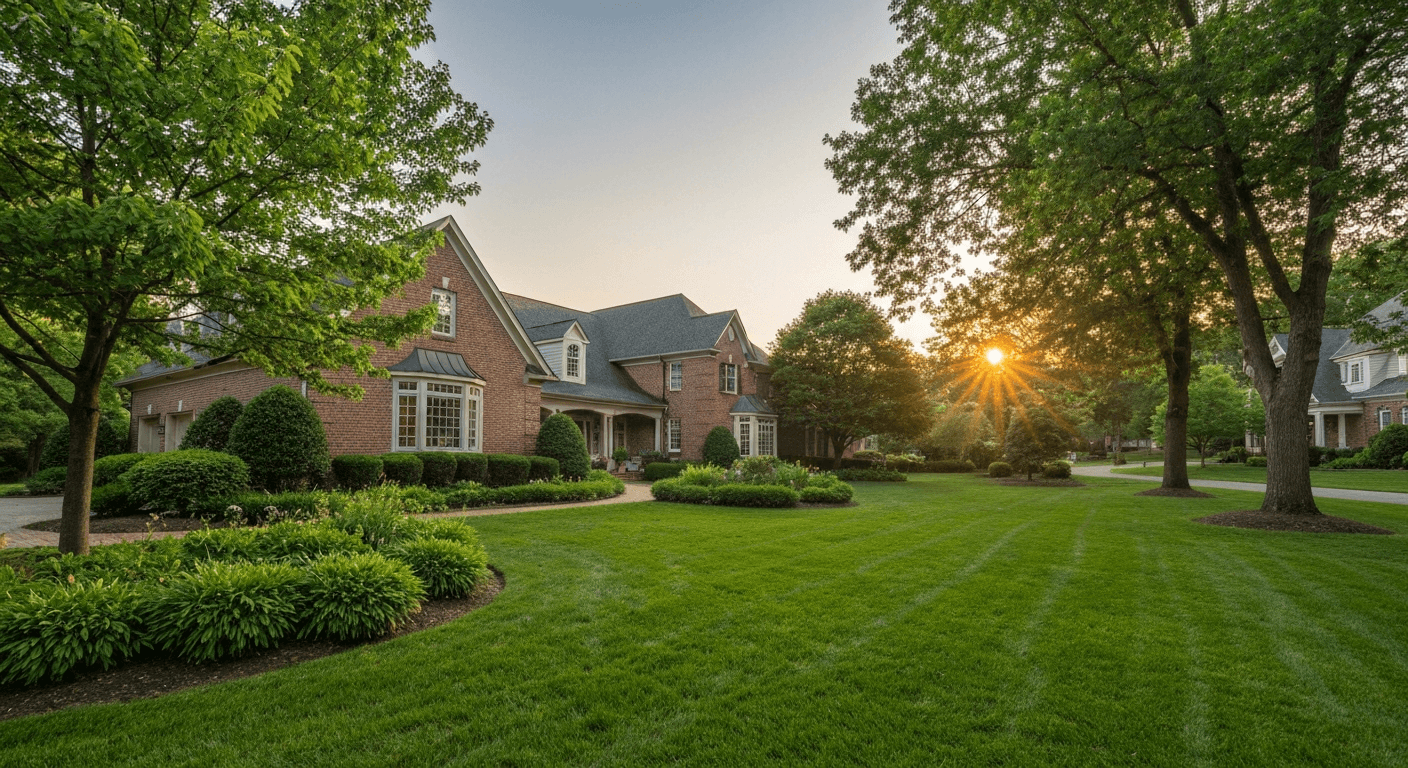
Bethesda, Chevy Chase, and Potomac are three of the most recognized real estate addresses in Montgomery County — and in the entire DC Metro. They're often lumped together as "premium Montgomery County," but they're meaningfully different markets with different price structures, commute profiles, and lifestyles.
If you're choosing between them, here's what actually separates them.
The Quick Version
| Bethesda | Chevy Chase | Potomac | |
|---|---|---|---|
| Metro access | Yes (Red Line) | Limited | No |
| Walkability | High | Medium | Low |
| Entry SFH price | ~$900K | ~$1.1M | ~$900K |
| Top-end SFH | $3M+ | $3M+ | $5M+ |
| Lot sizes | Smaller | Small–Medium | Large |
| Character | Urban-suburban | Quiet residential | Suburban-rural |
| Best for | Walkability + commute | Pure residential feel | Space + prestige |
Bethesda: Premium Meets Walkability
Bethesda is the most urban of the three. Downtown Bethesda is a real downtown — restaurants, retail, offices, a Wegmans, an Apple Store, and the Bethesda Metro station (Red Line) all within walking distance of residential streets. The National Institutes of Health (NIH) campus anchors one edge; Walter Reed is nearby on the DC side.
What buyers get: In Bethesda, you're paying a premium for walkability and Metro access. The housing stock ranges from pre-war English cottage-style homes in East Bethesda to new-construction luxury townhomes to large colonials in Burning Tree and Brookmont. Lot sizes are generally smaller than Potomac.
Price reality: Entry-level single-family homes in Bethesda start around $900K–$1M and escalate quickly. Well-located 4–5 bedroom colonials in popular school zones (Walt Whitman, Pyle) are regularly $1.5M–$2.5M. Above that, the sky is the ceiling.
Who it's right for: Two-income households where at least one person commutes to DC or Bethesda proper by Metro. Buyers who want to walk to dinner and not deal with a car for daily life. Buyers who prioritize school zone over square footage.
The honest downside: You get less house for the money than in Potomac. Lot sizes are small. Parking is real issue in some neighborhoods. The premium for Bethesda walkability is substantial — you're partially buying a lifestyle, not just a home.
Chevy Chase: The Quiet Residential Choice
Chevy Chase, Maryland sits right on the DC border — some streets literally straddle the line. It has a quieter, more purely residential character than Bethesda. The Chevy Chase Club, the country-club feel, and the tree-lined streets define it.
What buyers get: Mostly detached single-family homes on somewhat larger lots than downtown Bethesda, set in peaceful residential streets. The architecture is a mix of Colonials, Tudors, and mid-century moderns. There's a walkable commercial area around Friendship Heights (technically DC, but adjacent) and limited Metro access via the Friendship Heights station.
Price reality: Chevy Chase commands prices comparable to or above Bethesda. Entry-level single-family homes start around $1.1M–$1.3M; the top end goes well above $3M. Inventory is limited because the neighborhood is established and homeowners stay.
Who it's right for: Buyers who want the prestige and school quality of Bethesda but prefer a quieter, more established neighborhood without downtown foot traffic. Those who value the DC adjacency — some blocks are a 5-minute drive from DC, which is genuinely useful.
The honest downside: Very limited inventory, very high prices, and less Metro access than Bethesda. If you need to commute by rail daily, you're either driving to Friendship Heights (DC) or taking the bus. Parking and traffic on Connecticut Avenue can be frustrating.
Potomac: Space, Prestige, and Quiet
Potomac is a different kind of wealthy. There's no Metro. There's no walkable downtown. What there is: large lots, private schools, horse properties, large new-construction homes, and one of the most recognizable high-end addresses in the DC area.
What buyers get: More land. A 1-acre lot in Potomac exists. A half-acre is common. The C&O Canal National Historical Park runs through it. The country clubs (Congressional, Avenel) are nearby. The housing stock ranges from large 1960s–1980s ranchers and colonials to ultra-luxury new construction.
Price reality: Potomac has a wide range. At the entry end, you can find townhomes and smaller SFHs in the $700K–$900K range. The main single-family market runs $1M–$3M+. The estate properties — River Road corridor, Avenel — regularly sell at $4M, $5M, and above.
Who it's right for: Buyers who prioritize space over commute convenience. Those who want land, a private-school ecosystem, and the Potomac address without needing walkability. Remote workers who don't commute daily. Buyers with children in private school (Stone Ridge, Georgetown Prep, Bullis are all in or near Potomac).
The honest downside: You are car-dependent. Every errand requires driving. The commute to DC by car is 30–60 minutes depending on traffic and time of day. There's no quick Metro escape. For buyers who need to be in the office regularly, the time cost of the commute adds up.
How I help a $1.2M family choose between the three
When a family with a $1.2M budget asks me which of these three to pick, I tell them it's a lifestyle question and there's no single answer. So I start with how they actually want to live.
If they want convenience — walkable shops and restaurants, being close to everything — I point them to Bethesda. The homes tend to be more traditional and older, but you're trading square footage for a life you can walk to. You can get a feel for what's available at homes in Bethesda.
Chevy Chase offers similar convenience with a slightly different flavor: you're next to Chevy Chase Circle, and Connecticut Avenue takes you straight into Northwest DC. For buyers who split their lives between Maryland and the District, that access is hard to beat.
Potomac is the opposite end of the spectrum. Lots are large — often around two acres, with some one-acre subdivisions — and everything is spread out. It's car-dependent, and there isn't much nearby beyond Potomac Village. What you get in exchange is peace and quiet within 20–30 minutes of downtown DC. For a lot of families, that's exactly the point. Browse homes in Potomac to see what that space looks like at this price.
My job is to help you figure out which of those pictures is yours before we start touring.
School District Note
All three areas fall primarily within Montgomery County Public Schools (MCPS) with strong reputations. The specific cluster schools — and their reputations — vary by exact address. Whitman, Churchill, Wootton, and Walt Whitman clusters all feed from these areas. Always verify the current school assignment for a specific property.
Frequently Asked Questions
Is Bethesda or Potomac more expensive?
On median price, Potomac tends to run slightly higher because of larger lot sizes and more estate-scale homes. But Bethesda has more consistency at the $1.5M–$2.5M range for well-located colonials. The highest-end sales are in Potomac.
Can you walk to Metro from Potomac?
No. Potomac has no Metro access. The nearest stations are Shady Grove (Red Line) and White Flint (Red Line), both requiring a drive or bus connection.
Is Chevy Chase, MD a good place to buy a home?
Yes, if you can afford it. Chevy Chase MD offers excellent schools, DC adjacency, and a high quality of life. Inventory is very limited, which means you should be ready to move when something comes on the market in your price range.
What is the average home price in Bethesda, MD in 2026?
Single-family homes in Bethesda have a median in the $1.2M–$1.6M range depending on the specific neighborhood and school zone. Entry-level condos start around $400K; townhomes around $800K–$1.1M.
What is the average home price in Potomac, MD?
The overall median is in the $1.2M–$1.5M range, but this average masks a very wide distribution. Smaller townhomes start around $700K; large estate properties regularly sell above $3M.
Which has better schools — Bethesda, Chevy Chase, or Potomac?
All three areas feed into highly-ranked Montgomery County public schools. The perceived differences between clusters are marginal at the elementary level. At the high school level, Walt Whitman (Bethesda), Winston Churchill (Potomac), and Wootton (Rockville/Potomac border) all have strong reputations. The practical answer is: verify the specific school assignment for the exact address you're considering.
Where These Three Sit in the Broader DC Luxury Picture
Bethesda, Chevy Chase, and Potomac are three of the top-tier DC suburbs — but they aren't the only ones at this price point. The wealthiest DC suburbs ranked 2026 puts all three in the top 10 alongside their Northern Virginia peers (Great Falls, McLean, Vienna) and the lower-density Howard County option (Clarksville/River Hill). Worth a read if your buyer profile crosses the river.
Trying to Choose?
This is exactly the kind of conversation I have before any buyer starts looking at homes. Where you can afford what you need, which commute profile makes sense, what you're actually prioritizing — I help you figure that out before you fall in love with a house in the wrong ZIP code.
Sources & further reading
Official sources for verifying any of this yourself:
- Montgomery Planning — master plans, zoning and what is approved to be built nearby
- Maryland Real Property Search (SDAT) — ownership, assessed value and deed history for any Maryland parcel
- Montgomery County Public Schools — official school boundaries, ratings and enrolment information
About the Author

Edward Dumitrache
REALTOR®, Pearson Smith Realty
Licensed in MD, DC & VA · 10+ years · 100+ transactions · Montgomery County specialist
MD License 668402 · DC License SP98376910 · VA License 0225228053
Ready to make a move?
I'm always happy to talk through what's happening locally — no obligation.
Get in Touch